GOLD AND STEEL: THE ARCHITECTURE OF BVLGARI’S NEW BRUTALISM
The Walk


There was a definitive moment in the 1970s when Bvlgari tore up the high-jewelry contract. By introducing stainless steel into its repertoire, the Maison didn't just shift an aesthetic—it shifted the intent. Jewelry was no longer a static trophy; it became an object of industrial design. Today, that collision of materials returns with an execution that feels more essential than ever.
The revival of the gold-and-steel duo isn't an exercise in nostalgia. It’s a response to the demand for jewelry that mirrors a contemporary pace—where sophistication lives alongside functionality. Steel provides a technical, almost cold neutrality that acts as the perfect canvas for yellow gold to claim its spotlight without leaning into excess.
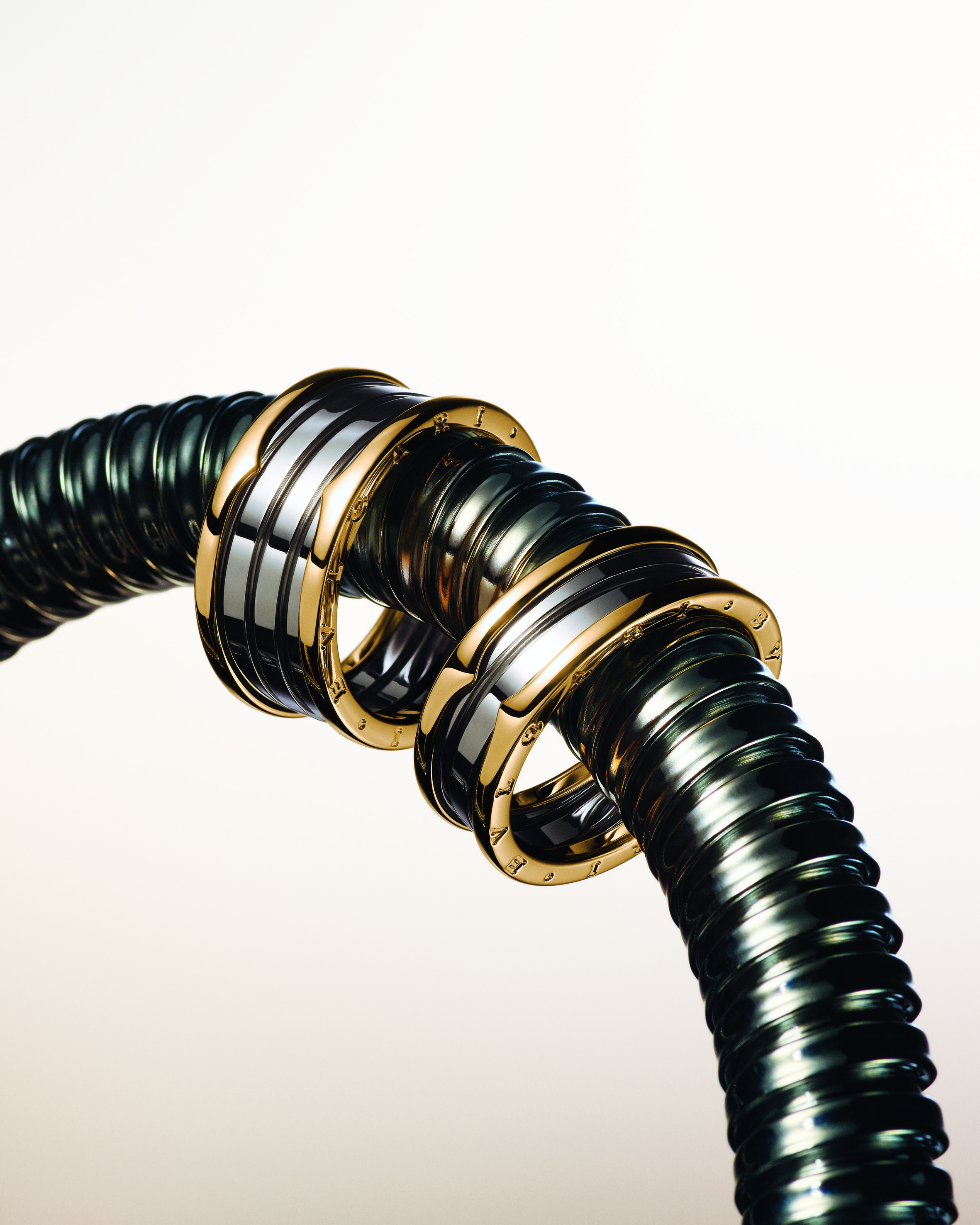
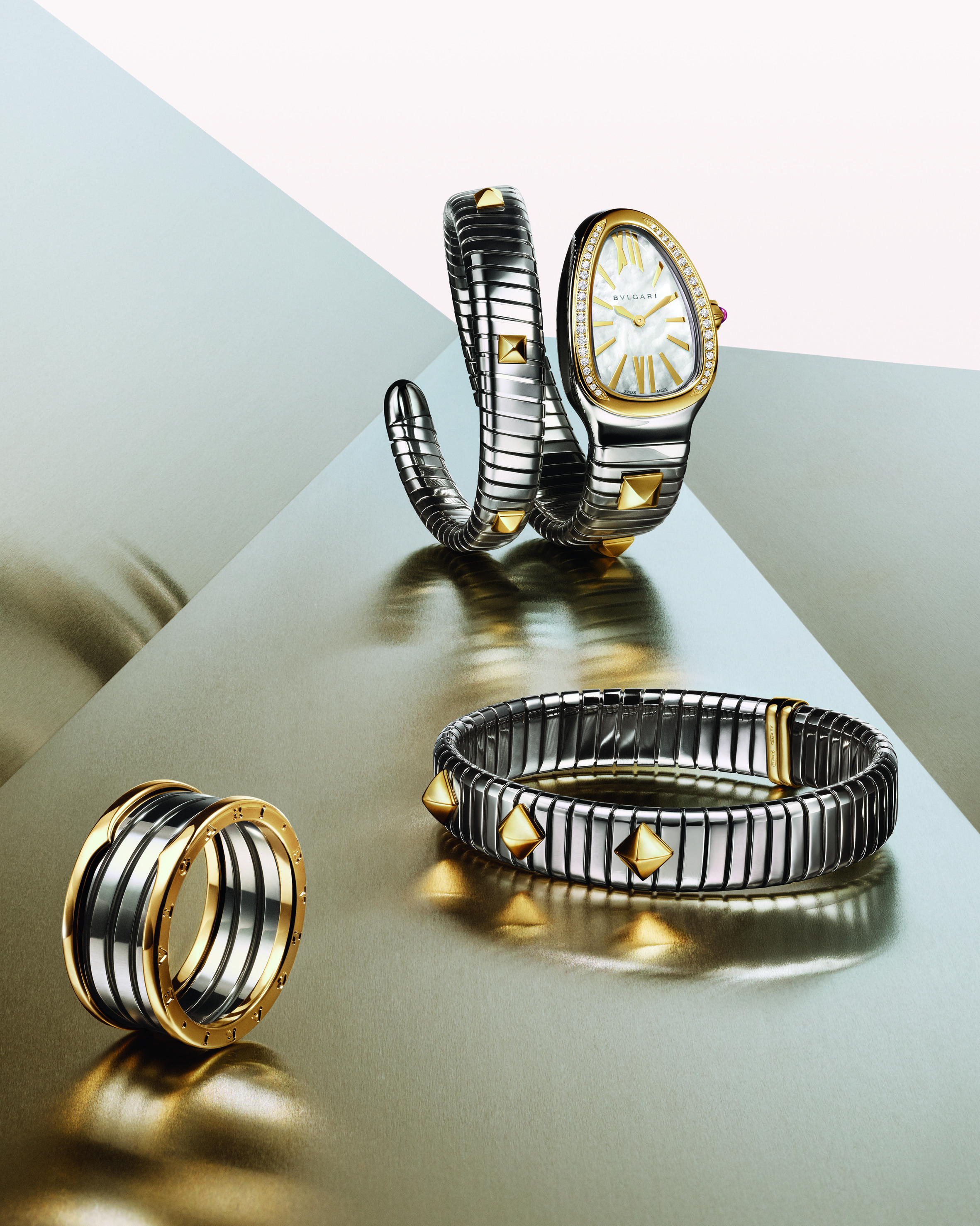
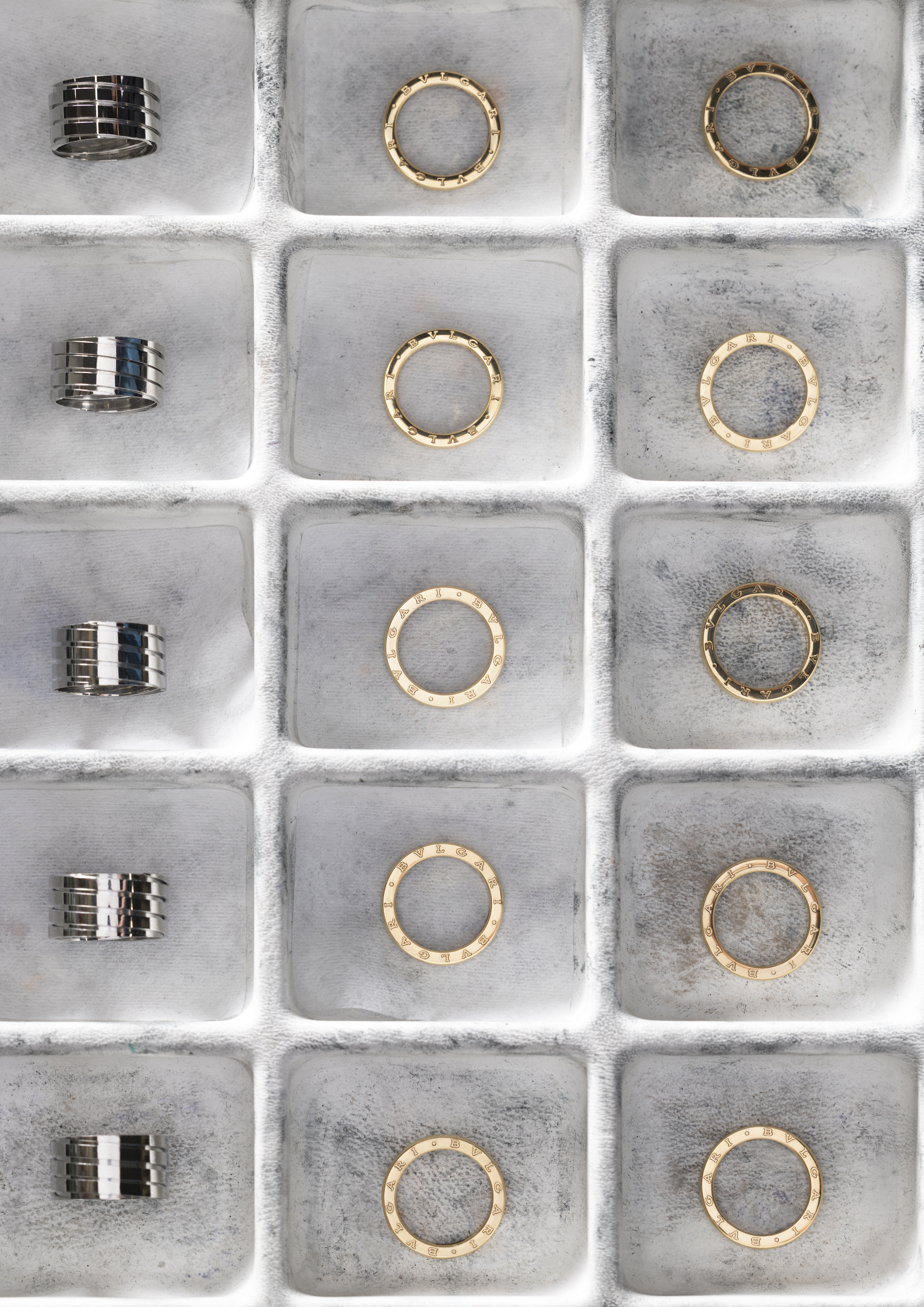
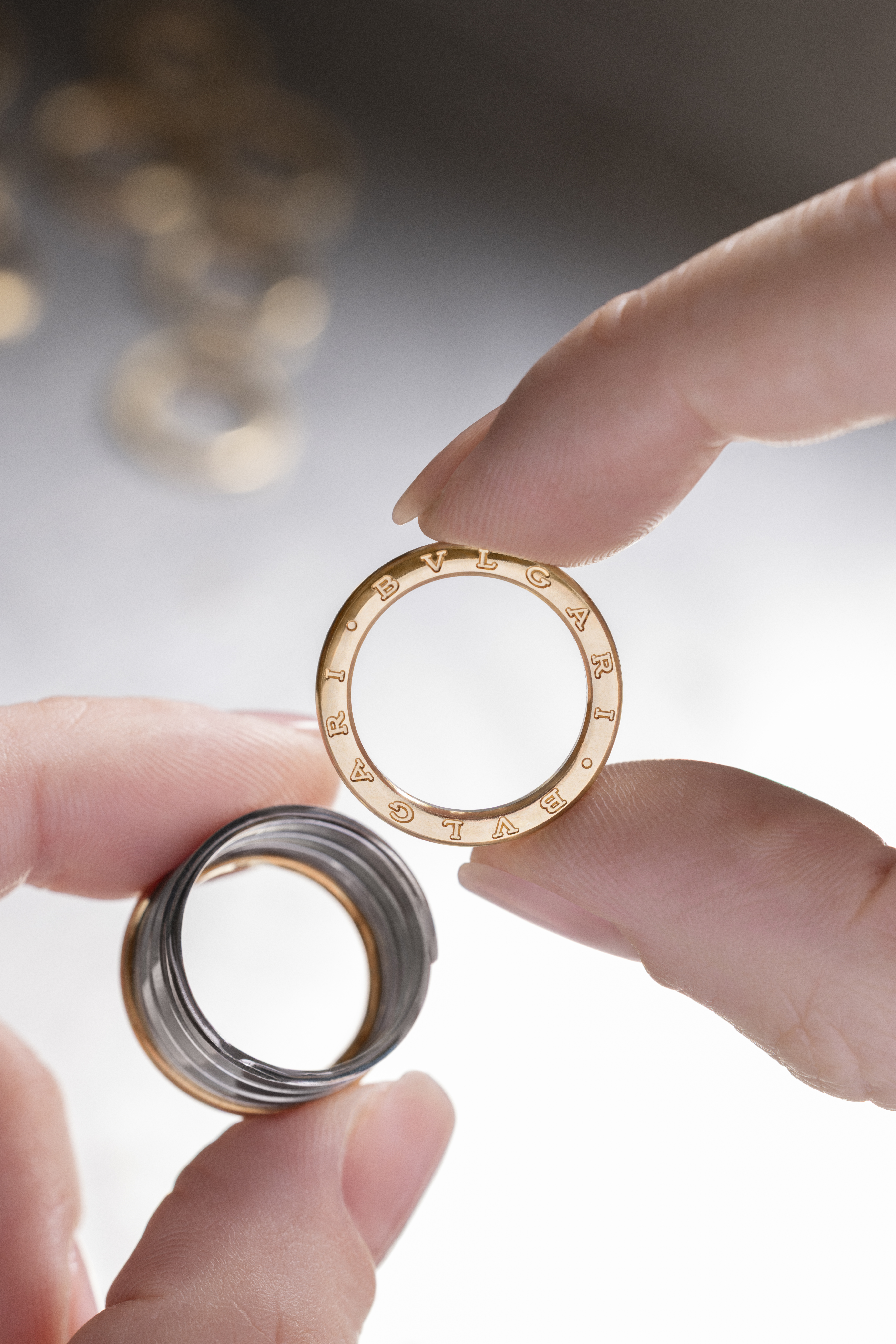
The new B.zero1 iterations—in two and four-band versions—lean into a sharper silhouette. Here, the iconic spiral feels like Roman architecture filtered through a lens of modern brutalism. The use of steel allows for a technical lightness that makes these rings thrive in daily stacking: they are pieces that feel substantial yet wear effortlessly, catering to a personal style that prioritizes structure over ornament.
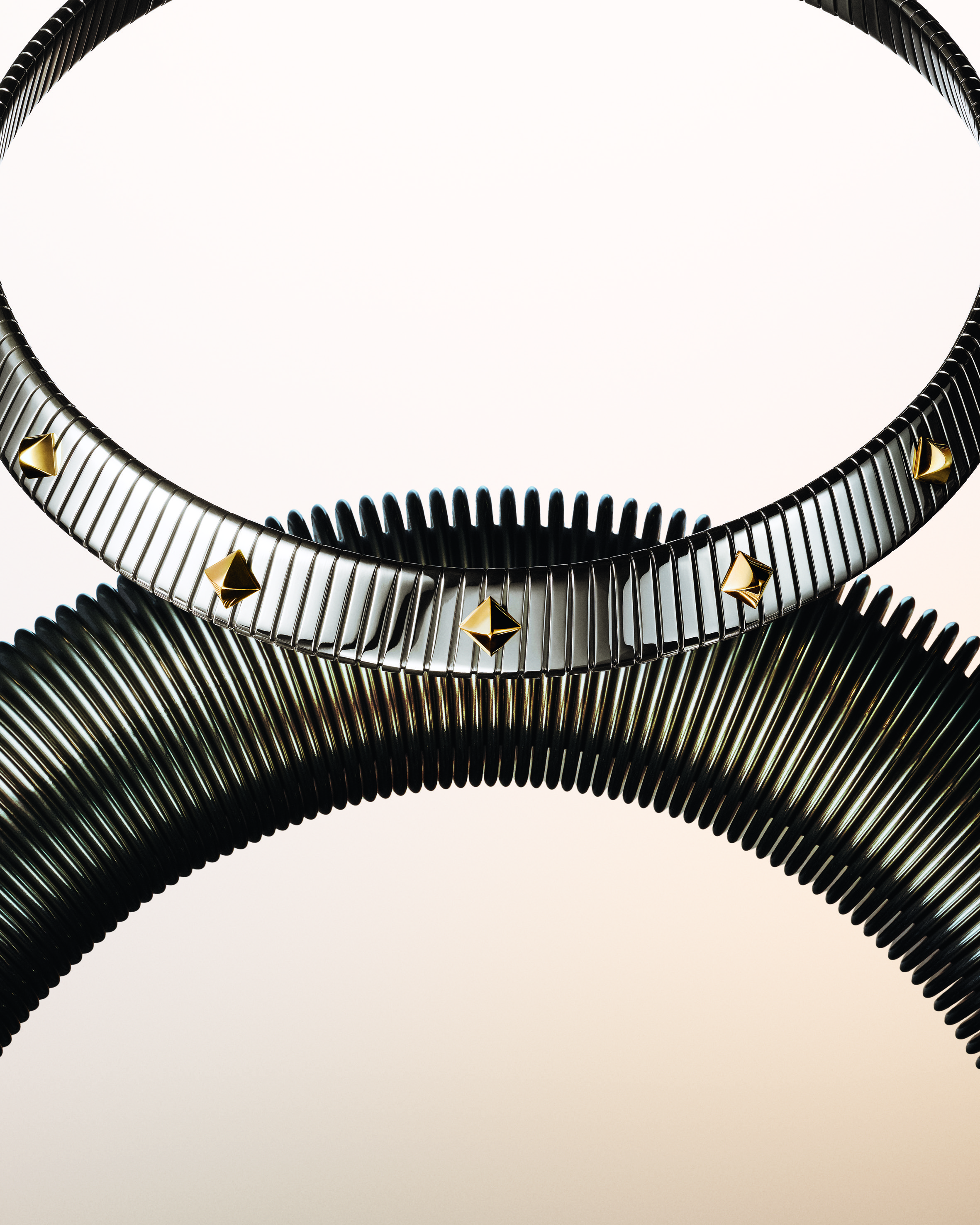
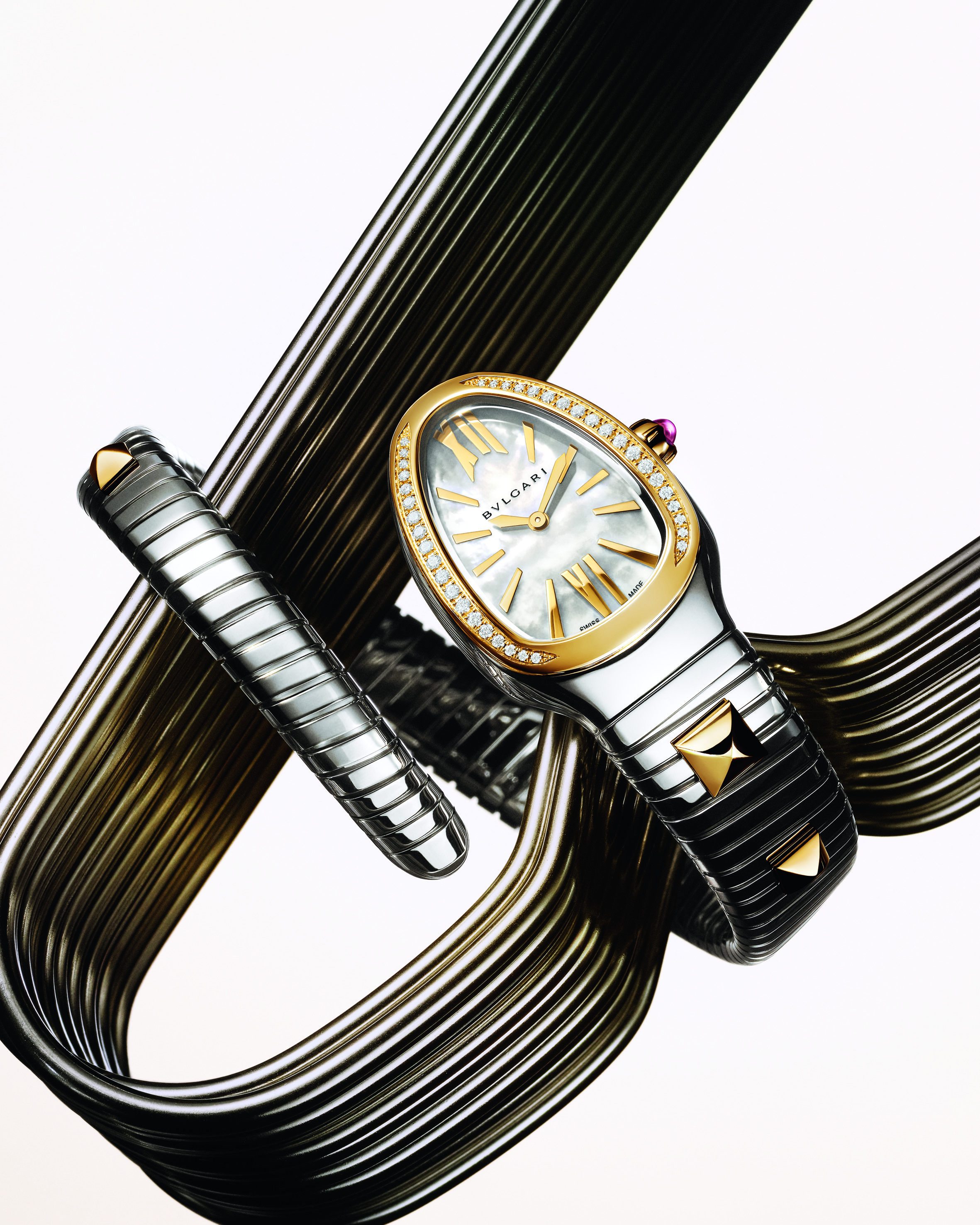
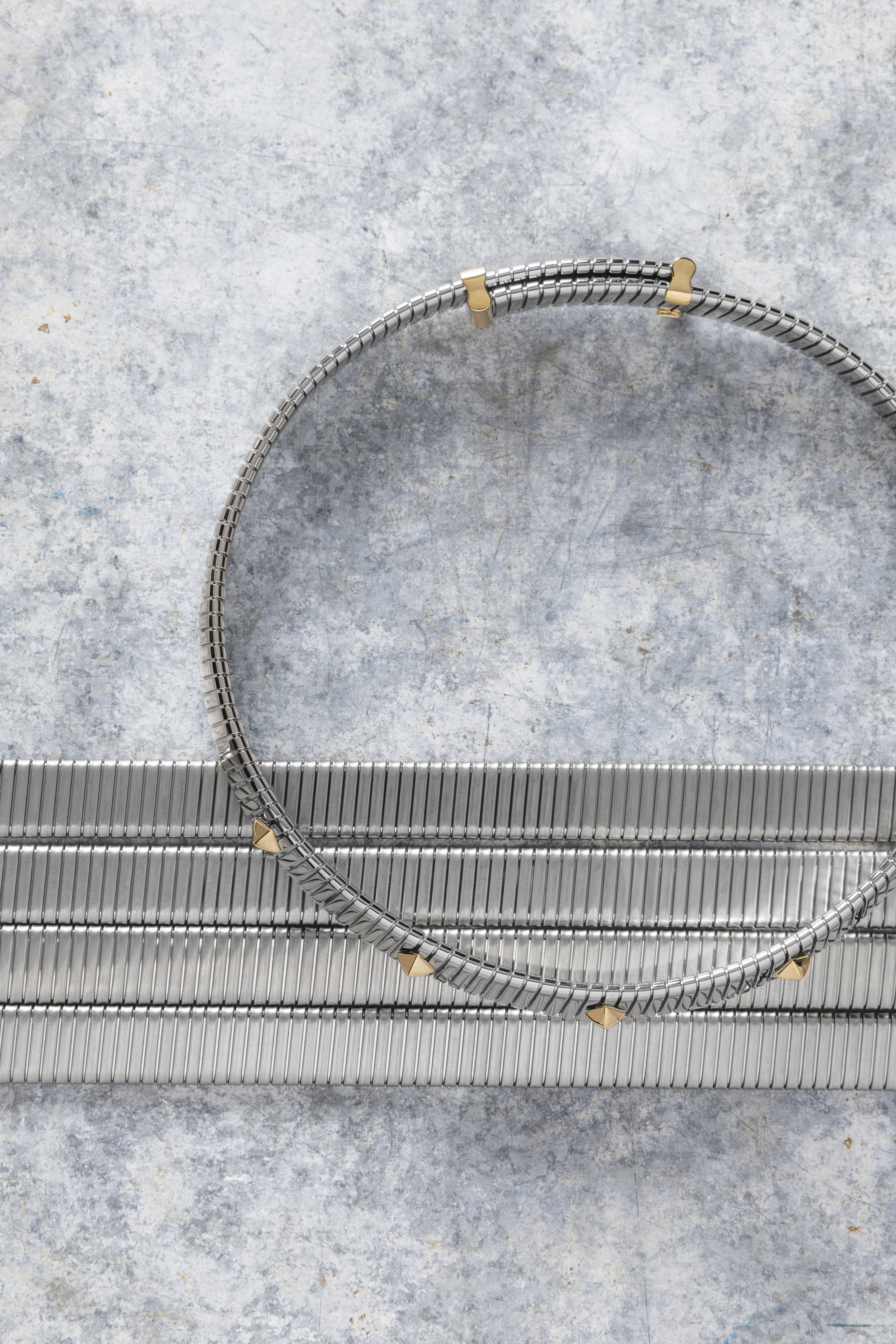
Bvlgari Tubogas remains proof that the best jewelry is born from technical experimentation. These steel coils, originally engineered without soldering, wrap the wrist and neck with an elasticity that pure gold could rarely replicate. In this release, yellow gold studs punctuate the industrial steel surface, creating a visual rhythm that feels more like a collector’s design piece than traditional jewelry.
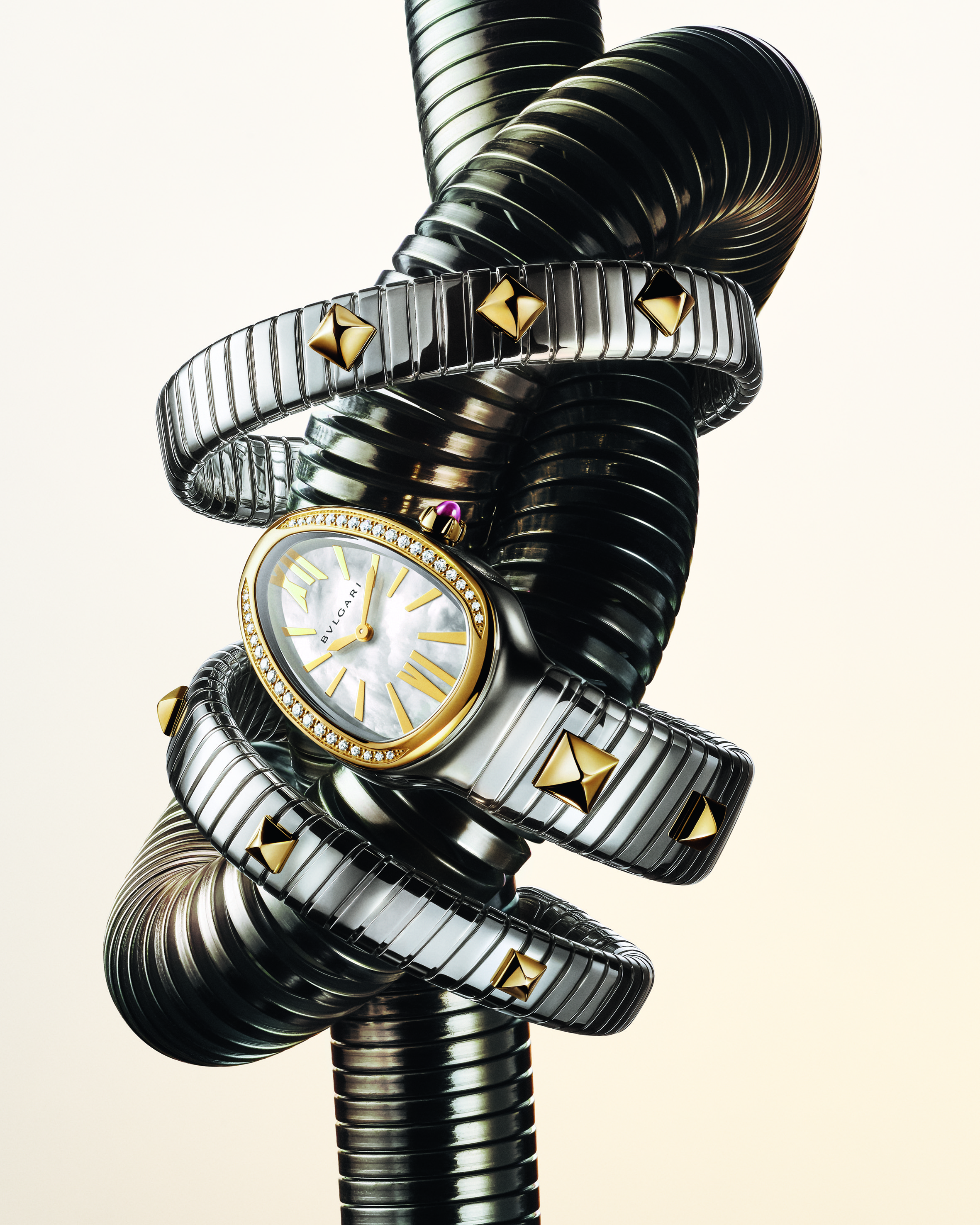
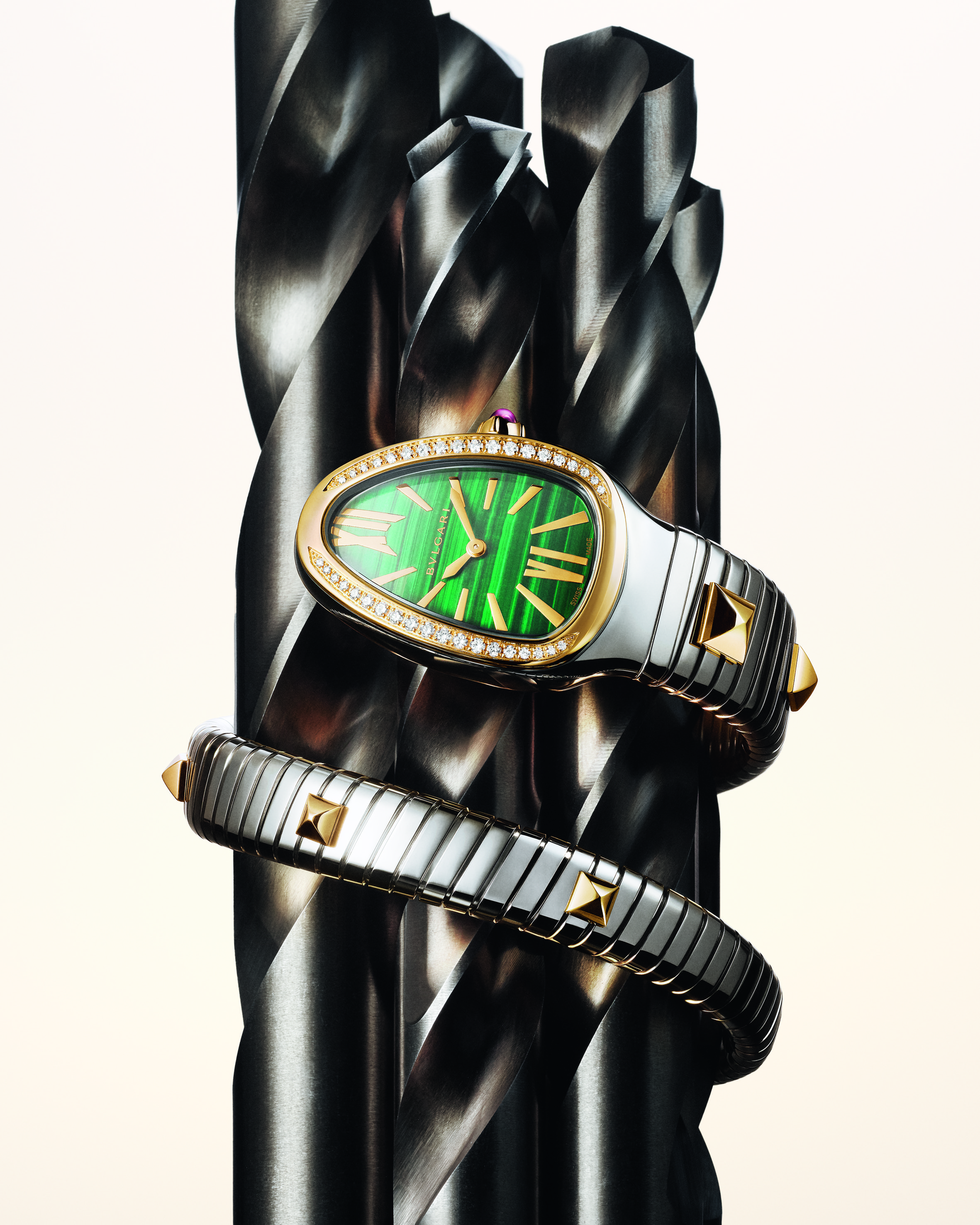
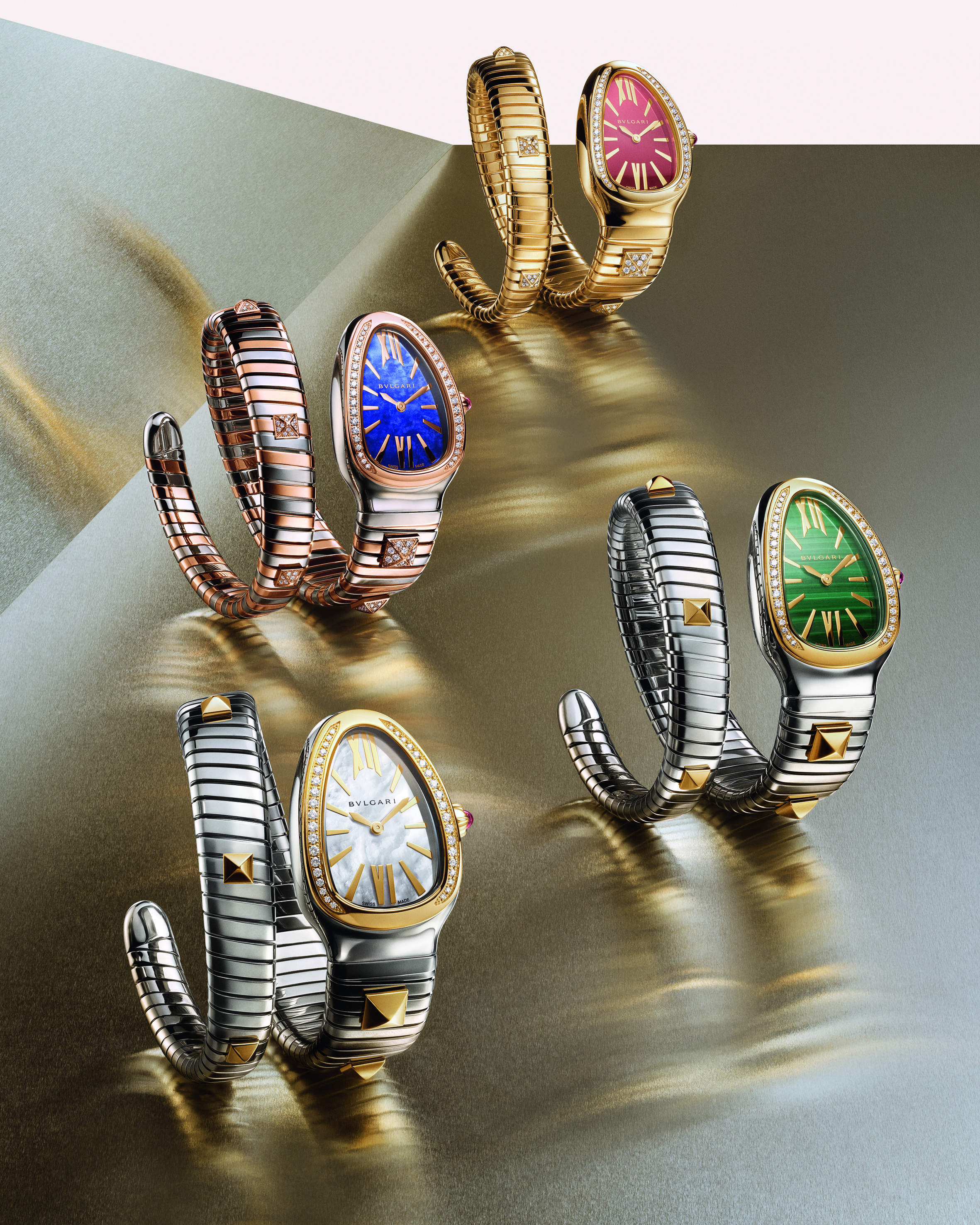
The Serpenti Tubogas Studs capsule collection translates this vision into limited-edition horology. The legendary serpent silhouette becomes more tactile, more geometric. With diamond and mother-of-pearl accents set against the steel framework, the watch ceases to be an accessory and becomes a statement: a piece that understands true value lies in the audacity of the mix, not the obviousness of the material.