VISITS TO LE MEURICE: THE YOUNG MAN WHO CAPTIVATED DALÍ'S IMAGINATION
Kevin Gorian
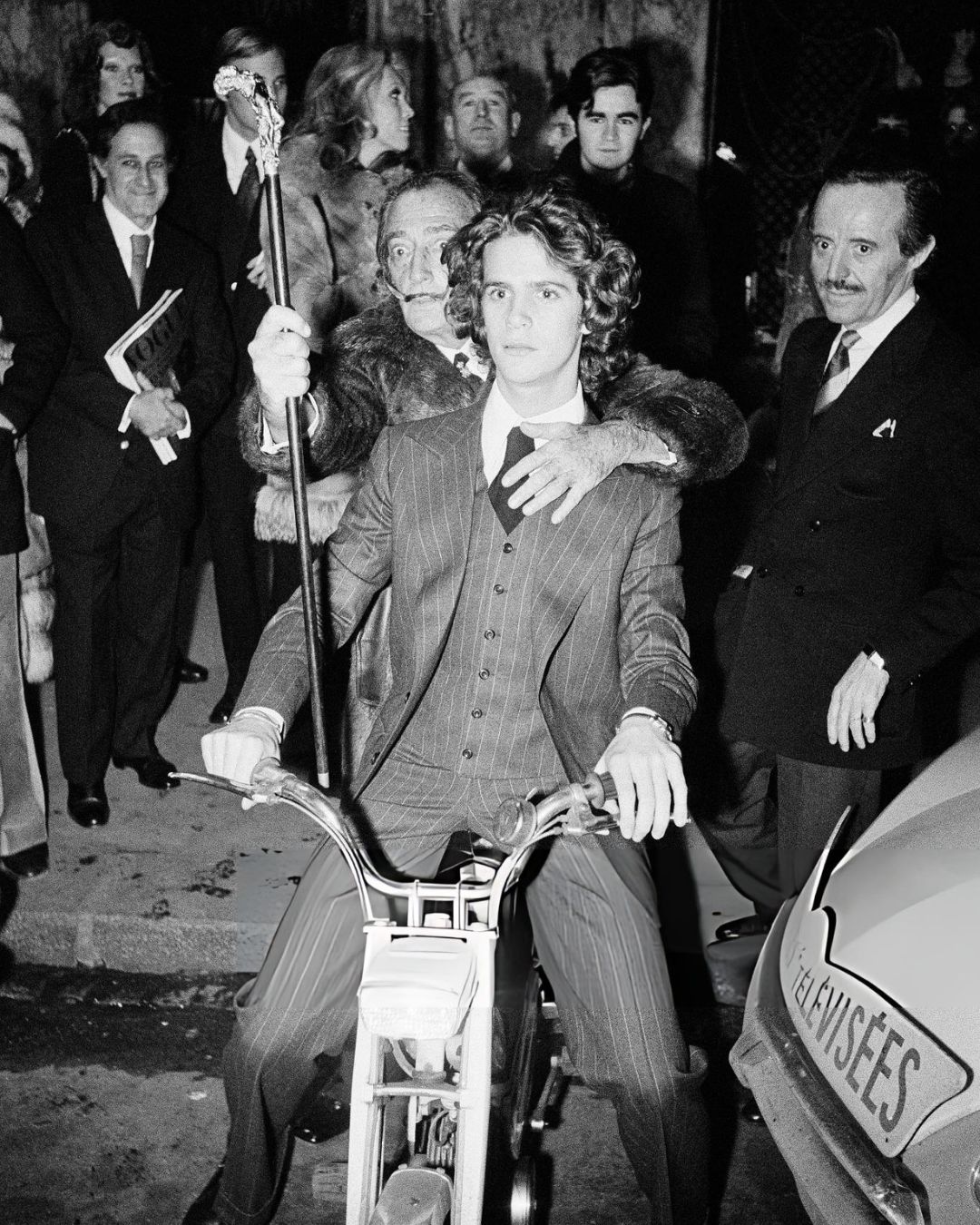

Salvador Dalí will forever be remembered as an eccentric genius—an almost poetic celestial force whose gravity pulled all kinds of people into orbit. Among them were the young prodigies who made up the “Dalí circle”: assistants, protégés, muses. Little moons tracing his magnetic path.
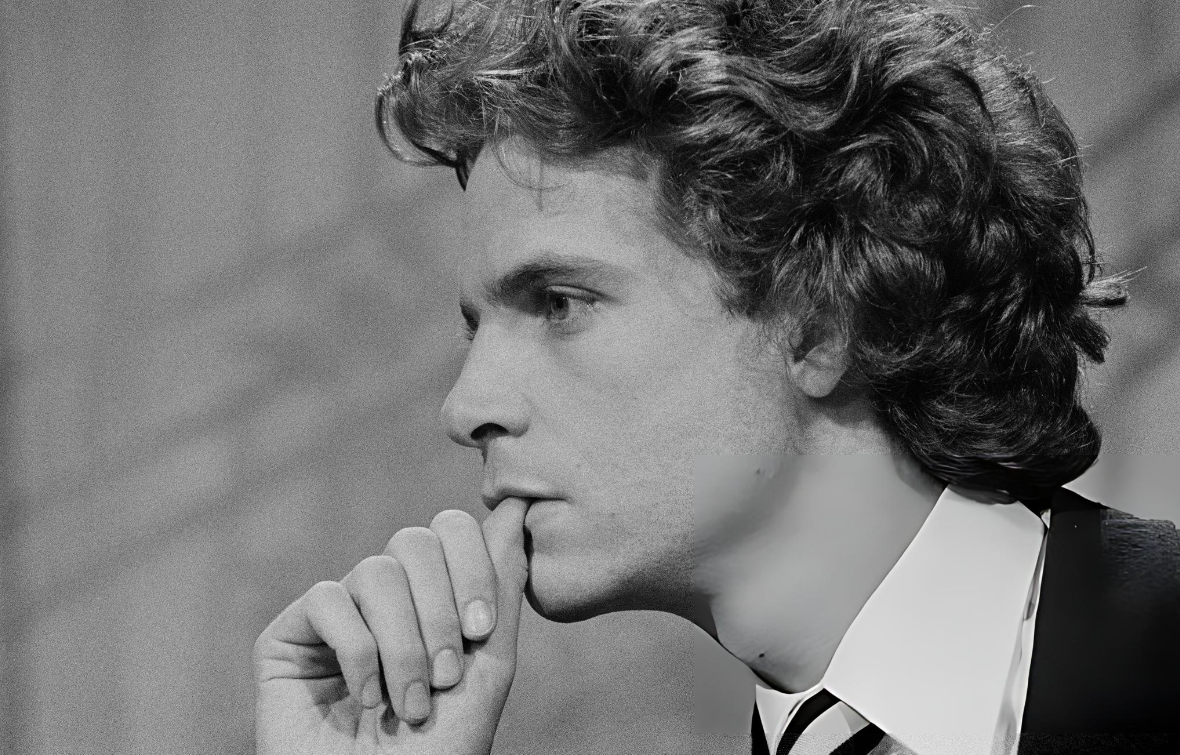
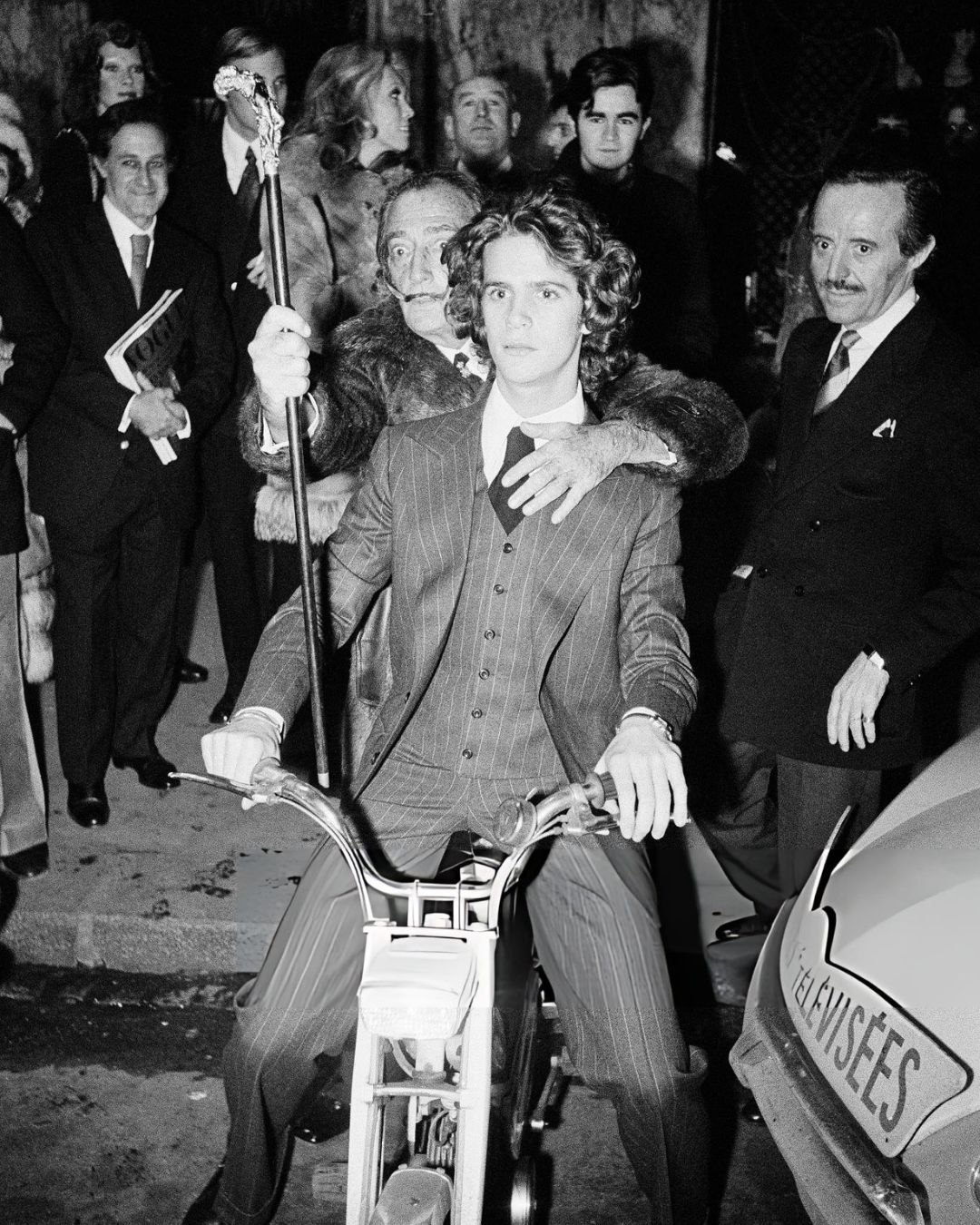
From this constellation, one figure shone brightly—both for better and for worse. A promising writer and photographer, he appeared alongside Dalí in a portrait taken by Alécio de Andrade inside a suite at Hôtel Le Meurice in Paris. His name was François-Marie Banier, who would later become entangled in the infamous Bettencourt Affair. But we will get there.
François was born on June 27, 1947, in the French capital. From an early age, he gravitated toward the arts. He was also an actor and a fixture of Parisian society. His first encounter with the emperor of Surrealism occurred when he was only sixteen. According to Banier, Dalí sent his private car to collect him and bring him directly into the painter’s universe: the now-legendary suite at Le Meurice. Historical accounts claim that Dalí spent one month each year there, for three decades, hosting his inner circle and young talents who seemed destined for brilliance. Even today, the room retains pieces of furniture the artist himself installed to make it more comfortable and more his.
François recounted that their first meeting naturally led to a conversation about art. The bond grew steadily, to the point where he considered Dalí his “surrealist father” and “mentor,” despite not being particularly fond of the artist’s work. What captivated him was not Dalí’s canvases, but his mind—the conversations, the imaginative worlds they could share. As Banier once said, plainly and without hesitation: “I never liked his art, but I loved his conversations.”
Their relationship never transcended into formal collaboration. There is no record of joint work or shared gallery space. What united them was something emblematic of the 1960s and ’70s: those intense, informal mentorships between rising talents and established icons—mutual fascination as a gateway into the art world, offering guidance, legitimacy, and social access.
Banier claims his encounters with Dalí spanned a decade—years in which he wrote his first novel (at twenty-two) and became a celebrated photographer of celebrities. Though born into a middle-class family, his proximity to Dalí opened the doors to luxury, patronage, and notoriety.
And as one might expect from a “surrealist son,” Banier’s story does not end there. Decades after his time with Dalí, in 1987, François met Liliane Bettencourt—the wealthiest woman in Europe—and became her confidant and constant companion. Over time, he received from her artworks, life insurance policies, money, properties, and gifts valued in the billions of euros. This relationship ultimately led to accusations of abus de faiblesse (abuse of weakness), resulting in a 2015 conviction: three years in prison and a €350,000 fine. In 2020, he was acquitted of some charges and withdrew from public life—able, at the very least, to say he has lived a life nothing short of extraordinary.