GRAMO: PORTABLE ARCHITECTURE AND THE LEGACY OF THE GAZE
The Walk
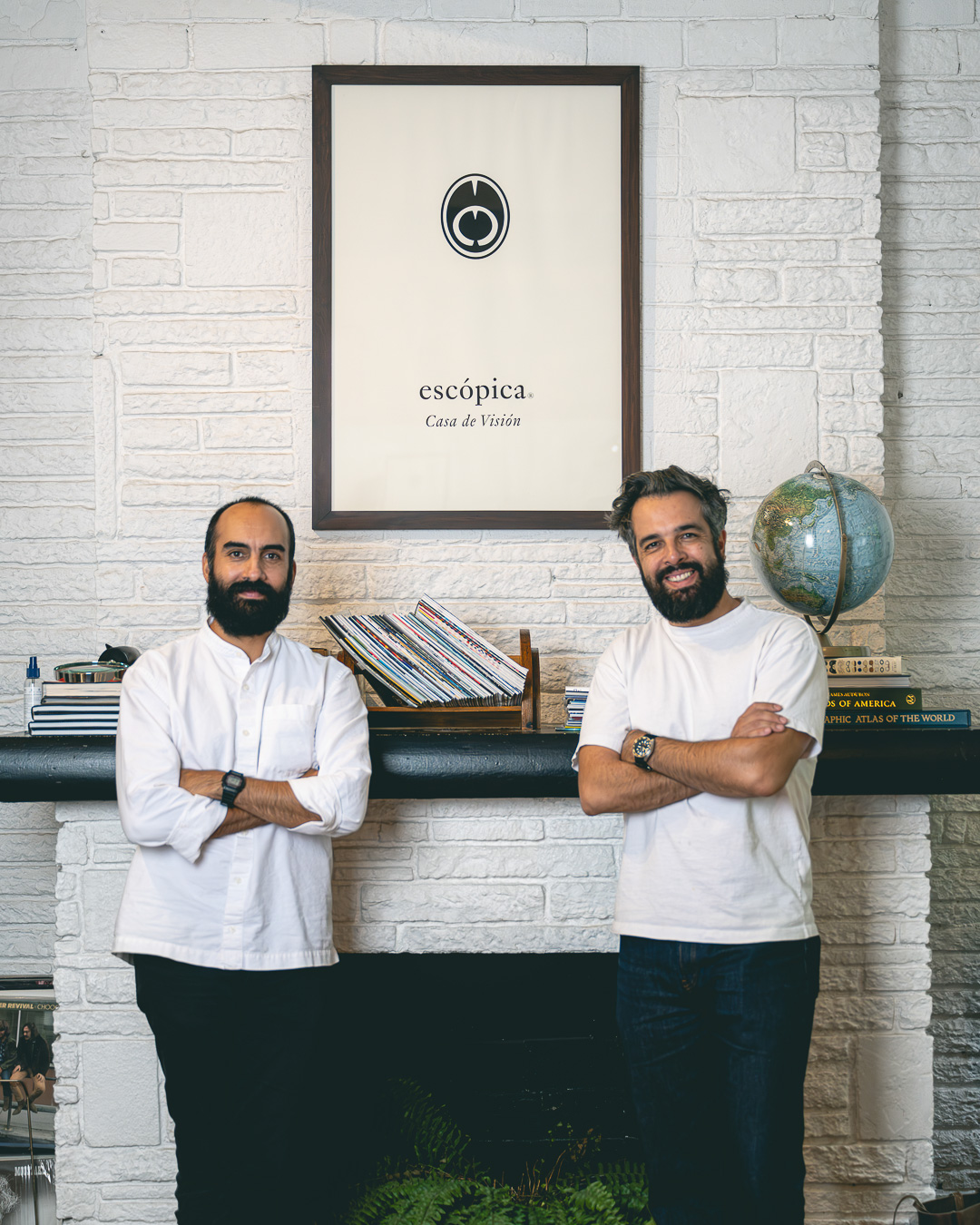
All images courtesy of GRAMO

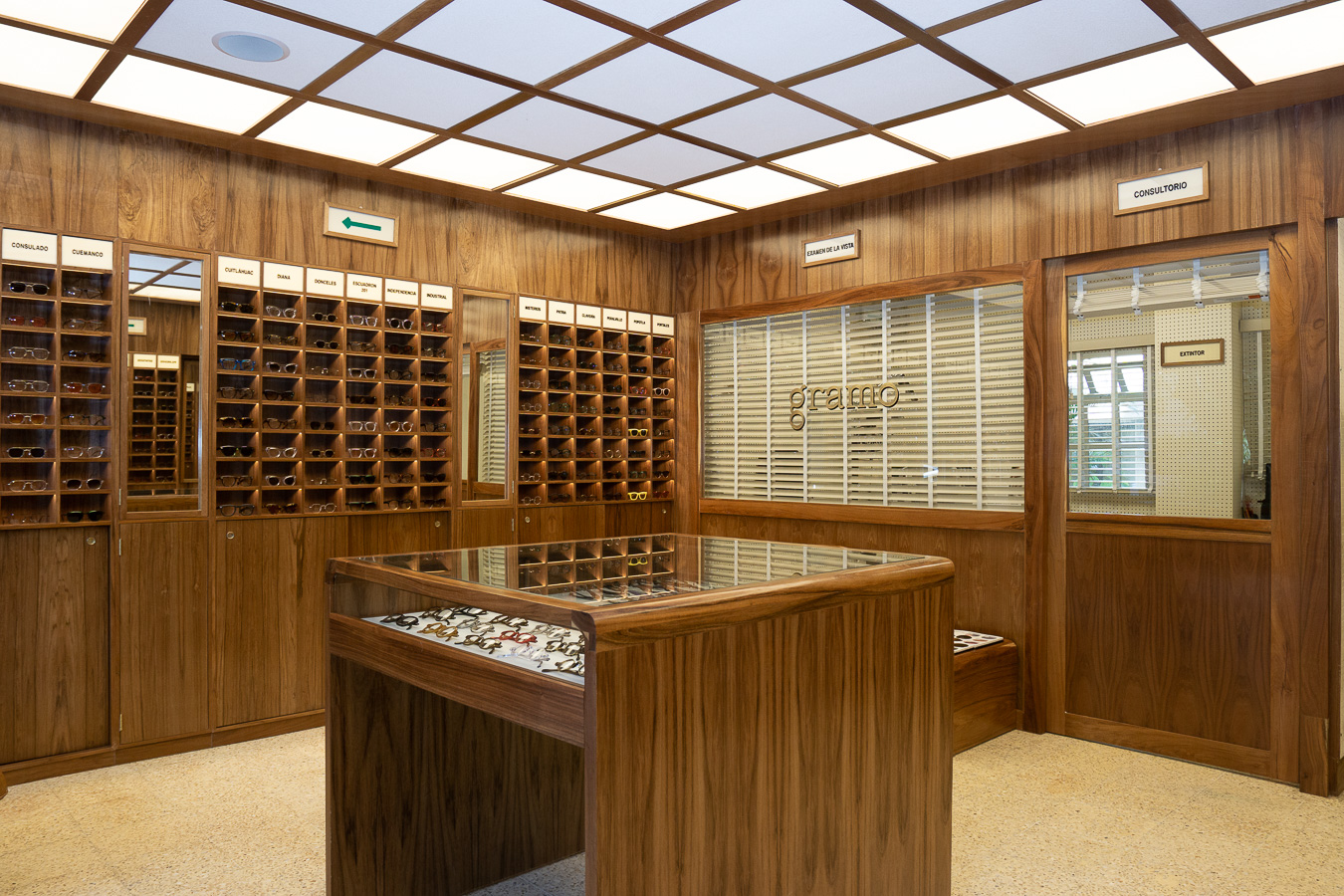
What happens when more than a century of eye-care heritage collides with the imperative need to create identity? The answer is GRAMO, a contemporary luxury eyewear label that defies the frenzy of fleeting trends to create authentic objects of permanence. Born from the desire to rescue the traditional frame from its strictly medical plane, the brand has forged its own language where glasses cease to be mere tools and become a cultural extension of the face.
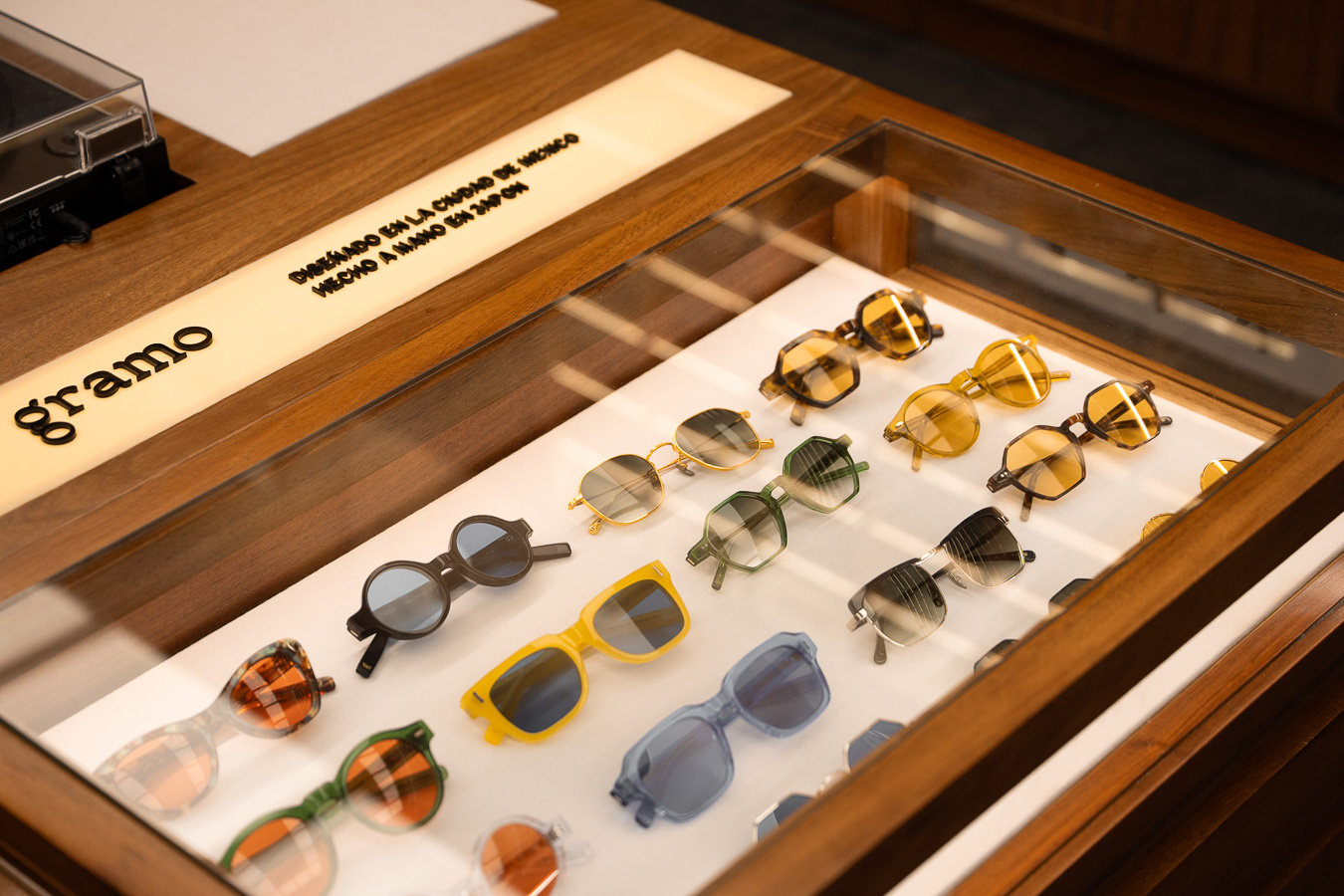
To achieve this, GRAMO has built a fascinating bridge between two seemingly opposite worlds: the free intuition of Mexican design and the rigorous precision of Japanese artisanal manufacturing, working hand-in-hand with the legendary workshops of Sabae, in Fukui. The result is acetate frames with a level of polishing and micrometric balance that transcends seasons, conceived under an anti-trend philosophy: pieces created to be inherited.
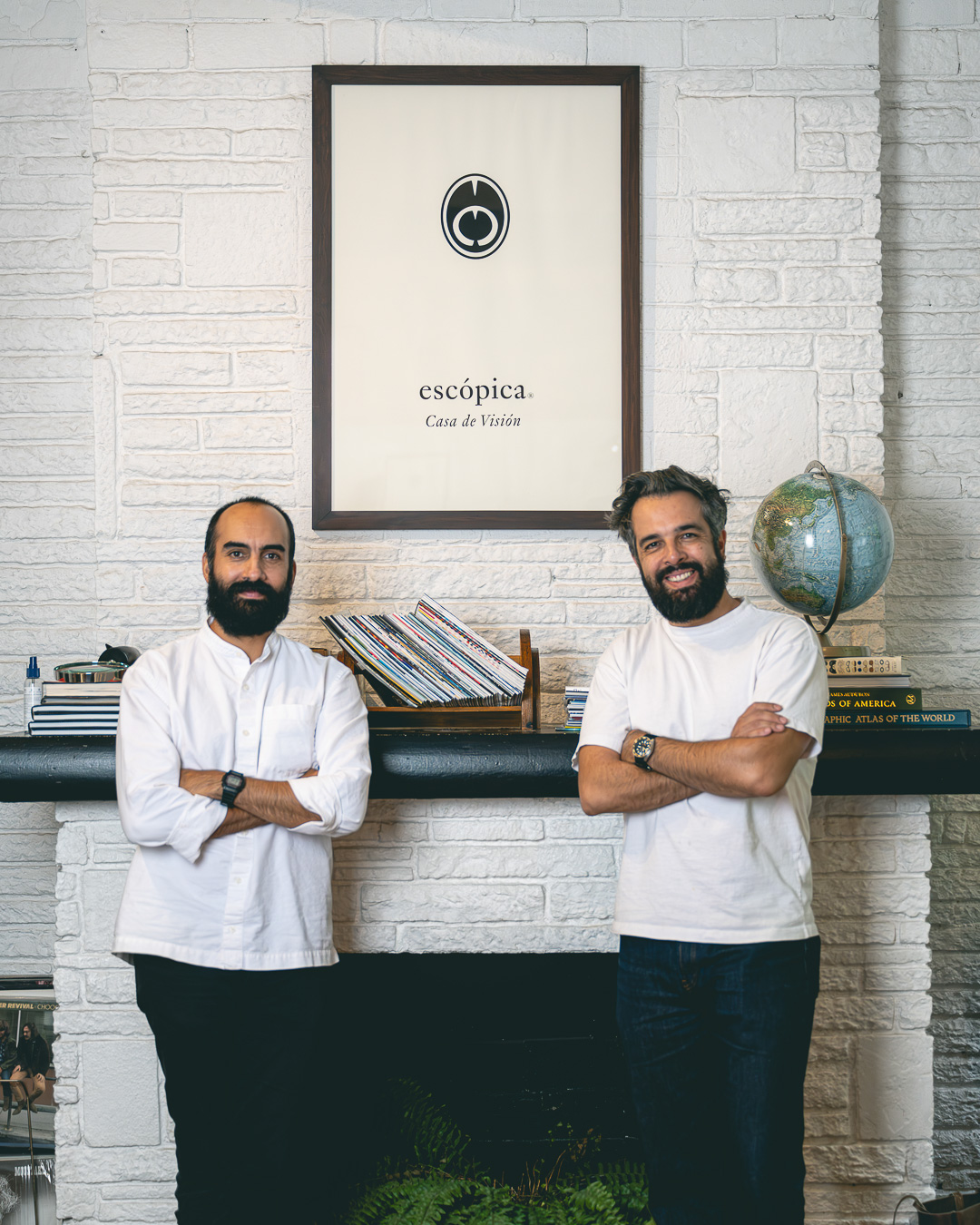
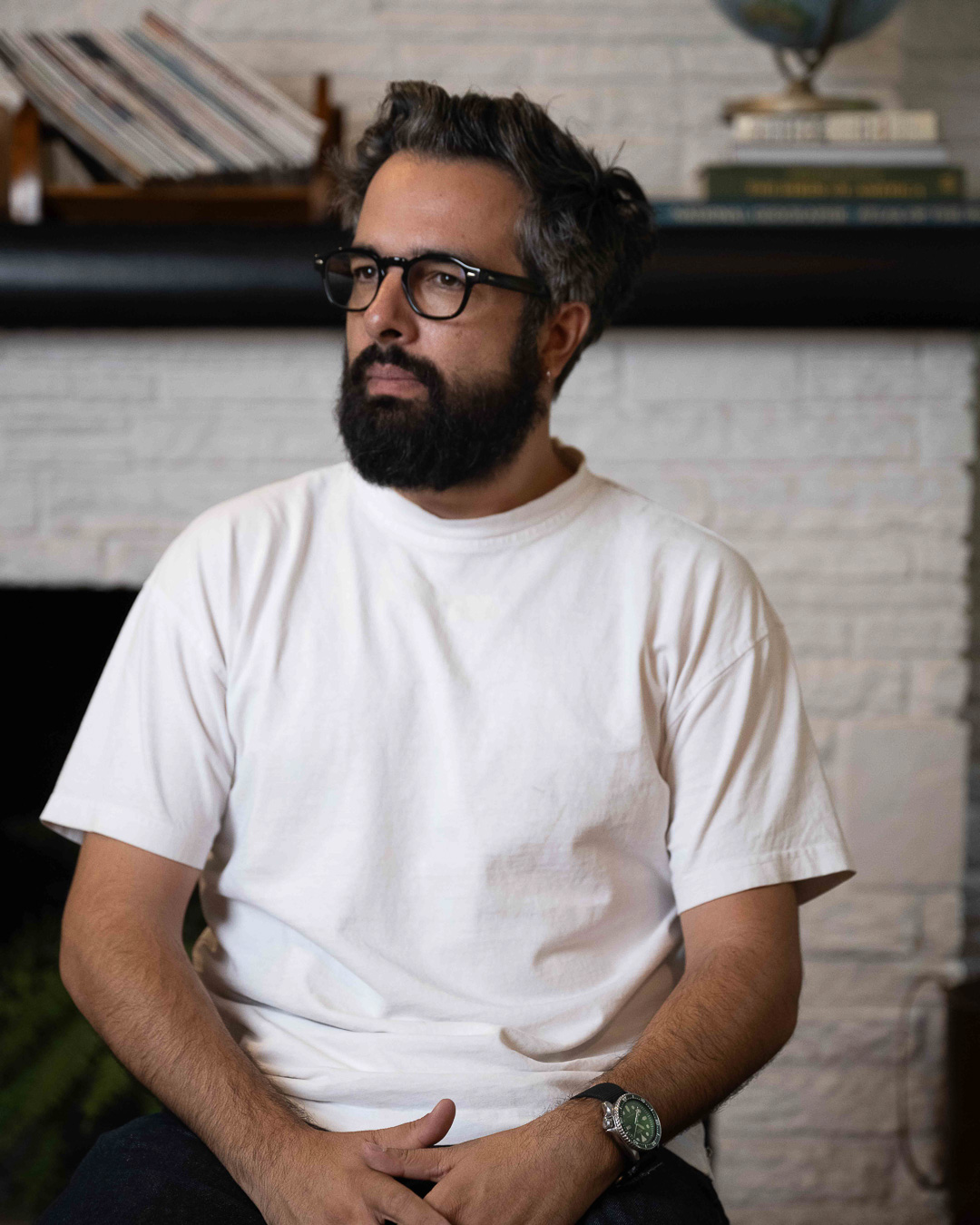
In this deep conversation, the brand's founders reveal how they translate the spirit and history of Mexico City’s streets into ergonomic design. Furthermore, they delve into their latest creative milestone: access to the unpublished archives of the iconic architect Pedro Ramírez Vázquez. Discover how they achieved the monumental challenge of distilling the principles of great Mexican architecture into objects weighing just a few grams, turning each pair of glasses into a true piece of "portable architecture."
THE WALK (TW): You carry the weight of a family legacy spanning over 100 years in visual health. Was there a moment of rupture or an epiphany that made you realize the traditional model was no longer enough and that you had to create your own language through GRAMO?
JAVIER AND DIEGO GRAUE (JyD): Our family has been dedicated to eye health for over a century. For us, specifically, it runs through us; we’ve breathed it since birth. We grew up around clinics, lenses, and conversations about prescriptions, surgeries, and so on. But over time, we understood that that particular world wasn’t exactly ours. That traditional world solved a medical need, but it rarely thought of glasses as a cultural object.
The epiphany wasn’t a dramatic moment, but an accumulation of questions: Why was an object that lives on the face—so intimate, so visible—almost always designed from functionality rather than identity? GRAMO was born precisely from that restlessness: taking that technical legacy and bringing it into the realm of design and permanence.
TW: The brand speaks of a "creative dialogue" between Mexican inventiveness and Japanese discipline. In practice, when working with the Sabae workshops, how is the design negotiated when the Mexican aesthetic vision encounters the rigidity and technical perfectionism of the Fukui artisans?
JyD: The dialogue with the Sabae workshops is deeply interesting because it stems from two different sensibilities. In Mexico, we tend to work from intuition, cultural reference, and a certain formal freedom. In Japan, particularly in Fukui, everything passes through the filter of precision.
At the beginning, one proposes an idea with a certain freedom, but the artisans examine it from the engineering of the object: thicknesses, acetate tensions, assembly tolerances. In that exchange, something very valuable happens: despite the layers behind it, the design is refined and materialized. What reaches the final product is a synthesis of intuition and discipline. And we love that commitment.
TW: Your manufacturing involves artisanal processes passed down through generations in Japan. Is there a specific technical detail in the polishing, the joints, or the acetate of your frames that only an eye truly educated in luxury construction would notice?
JyD: There are many details that go unnoticed by most people but are fundamental to us. One of them is the polishing of the acetate. In Sabae, the frames undergo a tumble-polishing process in barrels for literally days. That time is what generates a deep shine and a smoothness on the edges that is difficult to achieve with fast industrial processes. The sub-specialization in Japanese workshops is fascinating; there is a clear responsibility for every millimeter of the frame.
Another detail is the balance of the frame. A good pair of glasses doesn't just look good: it disappears on the face. That depends on micrometric decisions regarding weight, hinges, and curvature. These are things you don't necessarily see immediately, but when placed on the body, they are recognized. A good frame feels balanced and "disappears"; even if it’s a piece with an extravagant design, it merges with its wearer.
TW: In an industry that often breathes through the frenzy of seasonal collections, GRAMO explicitly seeks to transcend trends and create pieces to be inherited. How do you build and maintain the relevance of a contemporary luxury brand when its philosophy is, in essence, anti-trend?
JyD: The fashion industry lives in very fast cycles. From the start, we didn't identify with that rhythm. We feel closer to disciplines like architecture or industrial design, where pieces are conceived to last for decades. We don't seek to respond to the season, but rather to proportion, materiality, and character. If an object is well-resolved on those three levels, it can transcend fashion.
Relevance, curiously, comes from that very stance: when a brand doesn't chase trends, it ends up building a recognizable identity. That is very dignified and deserves the utmost respect; that’s why it’s a philosophy we strive to live by in our formal practice.
TW: Your frames bear the names of streets and monuments in Mexico City. When designing a specific model thinking, for example, of the Juárez neighborhood or Peñón de los Baños, do you translate the architecture of the area into the frame, or is it more of a capture of the attitude and lifestyle of those who pass through there?
JyD: The names of streets and neighborhoods in Mexico City are a way to anchor each piece to a cultural context. We trace a historical and cultural cartography of the city; it’s our archive of spaces and monuments that form a timeless map of the city that gave us life. We also try to capture an atmosphere.
The Juárez neighborhood, for example, has a particular mix of history and modernity; Peñón de los Baños has another relationship with cultural heritage—a deep-rootedness despite the city's transformations. The frames attempt to capture that urban spirit rather than literally translating a specific reference.
TW: The work of Pedro Ramírez Vázquez is monumental; it defined Mexico's urban landscape on a grand scale. What was the greatest technical and aesthetic challenge in taking architectural concepts of that magnitude and distilling them into an ergonomic object of just a few grams without losing its historical weight?
JyD: Pedro Ramírez Vázquez's work has a monumental presence in Mexico's urban history. One of our interpretations is his extraordinary vision for creating spaces for the practice of rituals that shape us as a Mexican society: the Azteca Stadium, the Basilica of Guadalupe, the National Museum of Anthropology. Religion, sports, and culture.
The challenge was understanding which of his principles could survive moving from an architectural scale to the scale of the face. It's not about miniaturizing buildings, but about identifying structural gestures: proportion, rhythm, geometry. In the end, the challenge is translating that monumentality into something extremely light: an object of just a few grams that nevertheless retains a certain structural dignity.
TW: Having access to the archive of one of the most brilliant minds in Mexican architecture is an immense privilege. During your research process, what did you find in Ramírez Vázquez's sketches or notes that completely defined the direction you planned to take for this collection?
JyD: Working with the archive was a revelatory experience because it shows the thinking behind the works. It’s being a witness to the seeds. More than the finished work, what interested us were the sketches. In them, a very direct way of thinking appears: clear lines, defined structures, clarity of vision for a major project.
That confirmed to us that the collection should avoid excess. Ramírez Vázquez had a very strong conceptual clarity, and we wanted the frames to reflect that same formal economy, paying homage to the form he used during that constructive stage of his life.
TW: You conceive glasses as a symbol of identity and legacy. By materializing Ramírez Vázquez's archive through Japanese artisanal manufacturing, what new interpretation or "second life" do you hope to give the architect's vision for the new generations who will wear these pieces?
JyD: For us, this collection is a way to activate the archive in another context. To revive it and, from our craft, give it new meaning. Architecture is usually experienced from a distance: walking past a building or visiting a museum. A pair of glasses, on the other hand, lives on an intimate scale. It’s on the face, in everyday life.
What we hope is that this translation allows Ramírez Vázquez's ideas to circulate in a different way: not just as historical memory, but as a living object, used every day by new generations, like a window placed before your eyes. In that sense, the glasses become a wink of portable architecture.