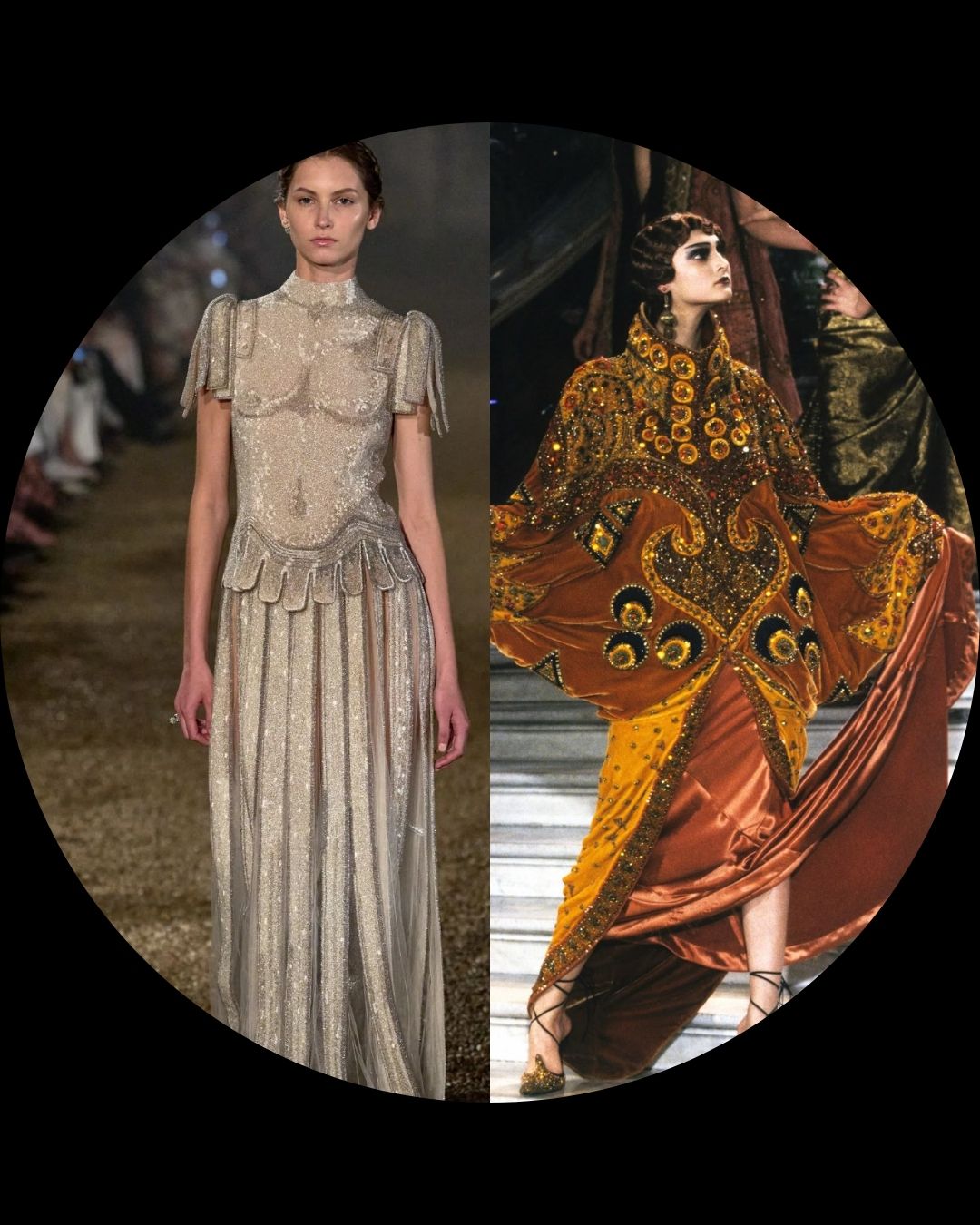
THE ARCHIVE AS A CAGE: WHEN A CREATIVE DIRECTOR DESIGNS FOR THE PAST
Select Ishtar


In fashion, there are two types of houses: those in which the founder still designs and remains present, and those now represented by new creative directors. We often read that they navigate “the archive” to reimagine classics, build collections, or retrieve emblematic elements of the past and bring them into a contemporary context while preserving the spirit and personality of the brand. But when does reference become excess, and begin to limit the designer’s creative vision?
One of my favorite examples of maintaining relevance and history while simultaneously expanding a house’s universe is the case of Schiaparelli under Daniel Roseberry. In every presentation, he preserves the surrealism with which Elsa founded the maison. He also revisits icons and silhouettes from the past, yet keeps them alive through technique, theatricality, and the creation of pieces meant to be admired—objects that speak to the modern woman and to the artist in search of inspiration. There is a clear influence from the past, but also from the present, creating an image that feels destined for posterity and speaks for two minds with respect.
We may grow tired of reading: “I looked at the history, I looked at the archive…” but it remains essential. Every brand has built a legacy through the eyes of its founders. If a creative director wishes to bring a purely personal vision to life, they can do so through their own label. Designers such as Jonathan Anderson or Glenn Martens maintain deeply personal universes; however, when it comes to leading houses with such defined heritage, the challenge lies in fusing that personality with the maison’s emblematic codes, opening a new chapter where leadership appears as an elegant and innovative gesture, not as an imposition of change.
So yes, we will keep reading about the archive until the dissolution of fashion houses. That DNA has already been written, and thanks to it we have witnessed remarkable eras such as Galliano at Dior, McQueen at Givenchy, or Lagerfeld at Chanel. Yet using this legacy to produce nearly identical collections can lead to a loss of identity, transforming the creative process into just another “chapter”—one that reveals more about the designer’s adaptability than about their ability to evolve the maison.
Another of the greatest challenges in adapting archival material is taking it too literally. Risk should be allowed. Consider Duran Lantink at Jean Paul Gaultier, who took his signature sponge silhouettes and infused them with the brand’s characteristic playfulness. Were both worlds visible? Yes—but the collection did not earn critical acclaim. Still, both identities coexisted in balance. When a designer references past garments, staging, and iconography to the point of replication, the collection contributes nothing to the present—or to the brand’s creative heritage.
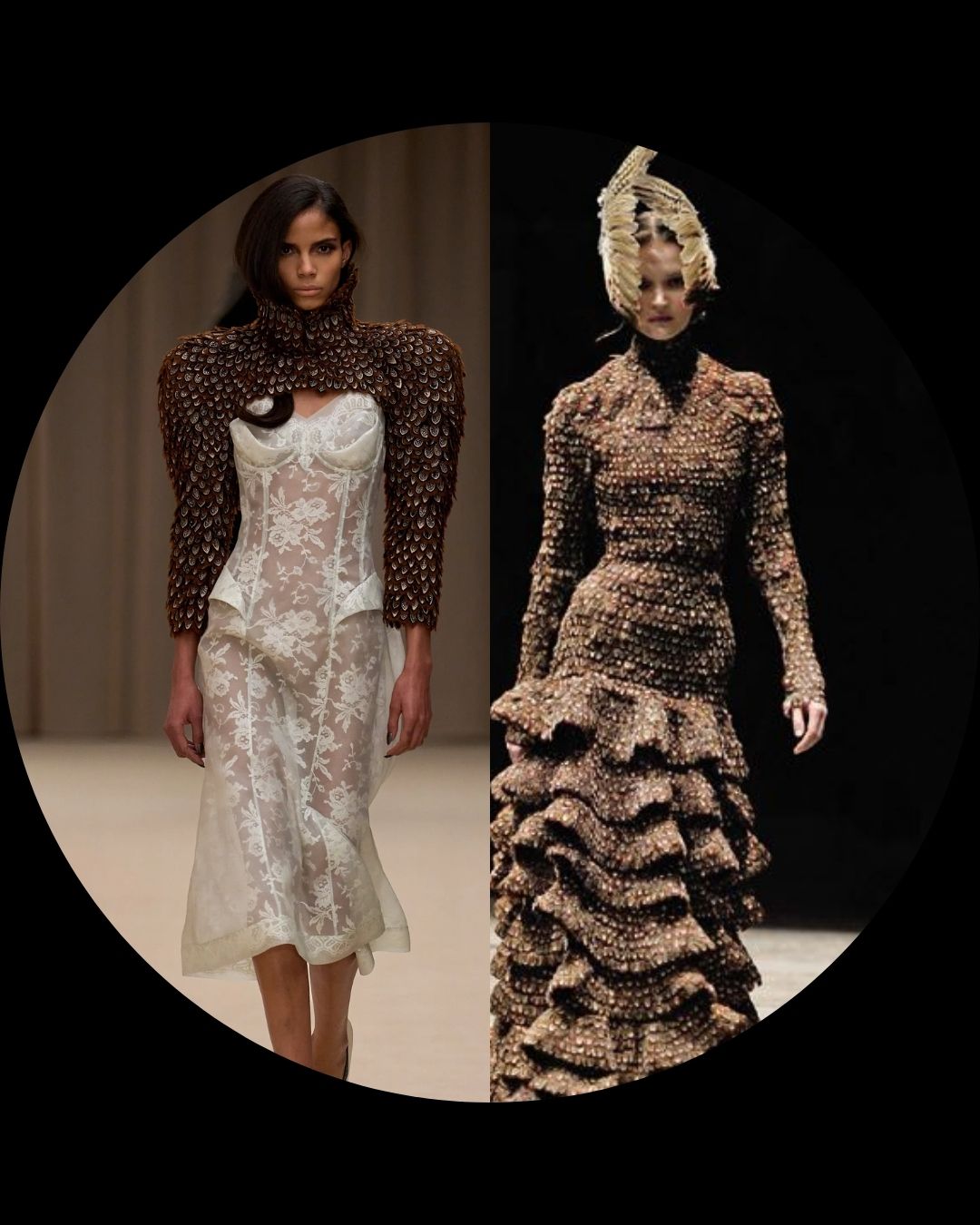
A recent example is McQueen’s Fall/Winter 2026 collection under Seán McGirr. Archival pieces were transformed into “everyday” silhouettes that felt somewhat disconnected, evoking past runway moments such as VOSS or The Widows of Culloden. In that risk, the collection felt like a university essay on what McQueen once was, rather than a vision meant to carry the house forward, as earlier eras had managed to do.
Understanding the founder of the house one works for is no easy task. It requires distilling the essence and conceptual language of those who established it in order to grasp their mindset. Beyond replication, a fashion archive should never limit its creatives; in simple terms, it exists to expand the universe of the brand. Louise Trotter at Bottega Veneta understands that the message of the house lies in elevating the unconventional, and she has done so with precision. Yet there are also cases such as Maria Grazia Chiuri during her tenure at Dior, where that interpretation often felt less visible.
I like to think about the longevity of fashion houses. When dealing with billion-dollar businesses and the invitation to become part of fashion history, substance and appeal are essential. It is often said that closing a couture moment can translate into major perfume sales for a house, so every garment must create a moment—something that invites those who see it to feel inspired, beyond the simple act of acquiring it. A name carries weight, and for that reason, the task is never simple.